Showing posts with label Phonics. Show all posts

Monday, October 12, 2015

13 (and more) ways to transform Daiso items into home learning activities

Yes, Daiso. The one shop I would go over and over and over again. Wouldn't you if everything is just at $2? Of course, Daiso is also a terrible place. Go in with the intention of buying just two to three items, and very often, you come out with more than ten. Arghh!!! But no matter how much we buy, we can always find ways to use them, right? :) There are just so many surprising finds that are potentially useful. All you have to do is to think a little bit more, squeeze those creative juices and viola! What I like about Daiso is the ability to use many of its items to create home learning activities for EV and AA.

So today, on this Daiso blog train by a group of Singapore Mom Bloggers, I'd like to share some home learning activities that I've created using oh-so-affordable items from Daiso (underlined items). Truly friendly to the pocket.

Language Literacy & Mathematics
For several of these activities, the materials were adapted for language literacy, number recognition, counting and even mathematical equations.

Wooden blocks (cubes & cuboids), plain-coloured tapes & fine marker pen
These blocks run out of stock really fast, because they are just so versatile! Kids can build with them, draw on them, the list is almost endless. Because they can be hard to find, I usually stock up on them the moment I see them at the shops. I stick plain-coloured tapes on the cubes, so that they can be reusable, and use them to build EV and AA’s language literacy and mathematical ability.

Story cubes

For language literacy, we use the blocks to do activities such as:
- CVC word formation - consonants and vowels are written on individual blocks, and words like CAT can be formed.
- forming words of two syllables or more - syllables of several words are written on separate blocks, for example, TA-BLE, and the mission is to join the blocks together to form complete words.
- sentence making - simple complete words are written on the blocks, and the task is to form simple sentences.
- roll & rhyme game - create a dice with the wooden cubes. Create worksheets where each dice value corresponds to a short vowel, long vowel or word families. For example, if the focus is short vowel, then 'number 1' can correspond to the '-at' word family, 'number 2' can correspond to the '-ap' word family and so on. The task is to roll the dice, identify the specific word family, and then write similar words that rhyme. The difficulty level of this activity can be adjusted to suit someone who has learnt short and long vowels, and word families, or someone who is just starting out forming simple CVC words
- story telling cubes - draw various images (can be of different categories such as animals, transport, food/drink, colours, musical instruments, toys, objects and so on) on the blocks. When the ideas are ready, take turns throwing the cubes and tell a story. Each person can take turns to tell the next part of the story.
- Chinese character recognition - write simple characters to enhance recognition. Or, write the different components of characters, and join the correct parts together like a puzzle.
- Chinese sentence making - write characters on the blocks, and form simple sentences by putting the blocks together.

We also use the blocks for counting, number recognition and simple mathematical equations. Just write the numbers and equation signs on the blocks, and throw the cubes to make it a game of ‘fastest wins’. We sometimes use pebbles, pom poms, and wooden pegs to enhance the learning.

Zips, fine marker pens, paper & paper clips
This activity can be used for forming words of two syllables, and for sentence making. Cut the felt into moderately sized pieces. The syllables of the same word is written on two separate felt pieces, then attached to each side of the zip using paper clips. Then have the child 'join' the syllables together by zipping the zip. Using paper clips means that several two-syllable words can be 'joined' and learnt in this way. Alternatively, this can be used for making short sentences. Write the first and second parts of various sentences on longer pieces of felt, for example, 'Peter is reading' and 'a book'. The child needs to find suitable parts, attach the parts to the zip and then 'join' the parts together.
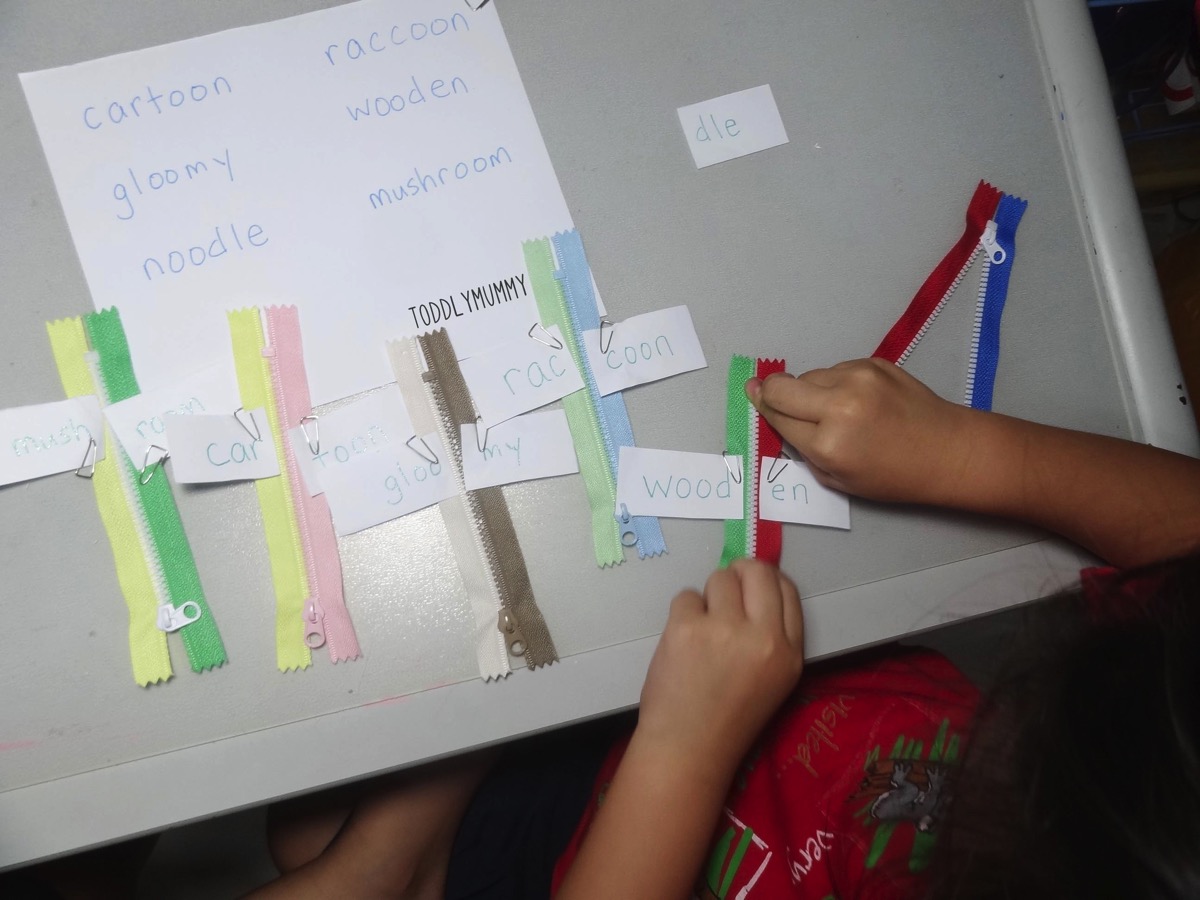
Zip

Notebook
This activity is for enhancing the learning of word families. Simply cut the pages of the notebook into two parts, one slightly thinner than the other. Write the consonants or consonant blends such as 's' or 'tr'on the thinner strips, and the word families such as 'at' and 'ain' on the thicker strips. Then the child can flip the pages back and forth to create and learn words. In the process, silly words that don't exist may be created, but it's ok. It's all part of language learning.

Notebook

Wooden clothes pegs, paper & fine marker pen
I created this activity for EV, as I thought this might be a more engaging activity than just writing or memorising her spelling words. Just write the alphabets on the wooden clothes pegs, and write the spelling words on strips of coloured blank paper. Then it is up to EV to find relevant alphabets and match it to the words on the paper. Each correct word gets a sticker. This can even be turned into a speed game, as she becomes more familiar with the words.

Wooden peg

This can also be adapted for mathematical equations. Just write equations on strips of blank paper, write the answers on the clothes pegs, and then match the correct clothes peg to the equation. Or, for sometime simpler, draw groups of dots on a piece of paper, and the corresponding numbers on the clothes pegs. AA had to count each group of dots and match the correct clothes peg.

Stickers & coloured origami paper
This activity is mainly for AA, to help him in learning about letter and number formation, as he’s slowing beginning to write simple strokes. I cut out letters and numbers using Daiso’s coloured origami paper (You can actually use any coloured paper, but I use Daiso’s because the paper is smaller, so there’s less wastage. Plus it’s extremely affordable at $2 a pack). Sometimes, I get EV to help me cut the letters and numbers out as reinforcement.

Stickers

Plus, as the big sister, it gives her much satisfaction to know that she’s helping di di learn. Once the cut-outs are ready, I get AA to stick stickers on them, following the stroke rules of the respective letters and numbers.

Pipe cleaners, coloured paper (cut into strips) or Post-its & fine marker pen
I created this activity as a more hands-on way for EV to learn her words. I wrote alphabets on strips of paper, one alphabet to a strip. Write the letter nearer the bottom of the strip. If using 3M Post-its, they may need to be cut into thinner strips. Using Post-its might be easier and quicker, as they are already in a smaller size; may just need to cut them thinner. Then roll the top of the strip around the pipe cleaner. For added security, I stuck a small piece of scotch tape behind. Slowly create the word, adding strips of alphabets one after another. Then when ready, just remove the paper from the pipe cleaner, mix it all up. I wrote the complete words on a bigger sheet of paper, and got EV to form the words from the pile of paper strips.

Pipe cleaner

This activity can also be extended to learn mathematical equations. Just replace the alphabets with numbers and mathematical signs.

Hemp string & paper
This is extremely versatile. Alphabets and numbers can be written on the paper and give to any kid of any age to trace using different lengths of yarn. The difficulty can also be modified, such that words are written instead of alphabets.

Hemp string

Pipe cleaners, pebbles, poms poms, measuring tape
EV and AA use these materials to measure and learn about perimeter, length and height. They measure anything they can find in the home, from tables to sofas, to dolls and cars. In the process, they discover that a table can be as tall as 10 pipe cleaners, while a toy car can be as long as 10 pom poms. Each of them also has a retractable measuring tape, which they use to measure like little builders. I also teach them about units of measurements, like centimetres.

Measuring

Sensory Fun
Fake grass, pebbles & Safari Ltd Toobs Dinosaurs
We are dong a home learning theme on Dinosaurs, and this sensory tub really got AA excited. It’s simple to set up - just some fake grass and pebbles from Daiso and a couple of toy dinosaurs. Later, the kids also asked for recycled milk cartons and bottles to 'feed' the dinosaurs. It was good seeing them engage in pretend play too, and made up story about he the dinosaurs were lost and needed to be saved.

Dinosaur

Water beads, marbles & Safari Ltd Toobs Sharks
Whenever EV and AA run out of ideas to entertain themselves, they’ll always turn to their parents and say ‘What should I do now?’. Water beads is a sure winner with them. So I try to think of as many sensory tub combinations with water beads as I can. Usually, it’s just looking for whatever is available and putting these randomly together. Because really, as long as there are water beads and water, the kids will be kept busy for quite a while. I generally like to add marbles, pebbles, plastic alphabets and numbers, or even toy creatures. Add ice for a little variety. Varying the ice shapes (big blocks, cubes, spheres) can also make a difference.

Water beads

Strainers, flour, baby oil, moulds
This can get a little messy, and I don't just mean the kids. I first put the flour in a shallow container, give the kids strainers and off they go sifting the flour. Over-enthusiastic AA likes to fling the flour all over the place, so it's a good idea to have this activity in the bathroom, or anywhere where it's easy to wash off after. Later, I add baby oil to the flour, and get the kids to mix them up into a nice soft dough. Once this is achieved, the moulds go in for some shaping exercise. This activity is deliberately broken up in to separate parts, so that the kids can be engaged for a longer time.

Flour

Wooden blocks, pom poms, recycled milk cartons, recycled Yakult bottles, Safari Ltd Toobs Knights & Dragons
This was really one of those random activities I put together one hazy afternoon, when I was tired and extremely uninspired, but surprise surprise! It got the kids busy for quite a while. I think it stretched their imagination, and also trained their motor skills. They could stack the blocks into the milk cartons,, which I had cut into half, or they could squeeze the pom poms into the Yakult bottles. Or they could build their own castles, bridges and what nots for the knights and dragons to battle it out.

Blocks  pom poms

Pom poms, paper, glue
A really simple activity that also practices motor and spatial skills. I drew a simple tree, and got AA to glue green pom poms on to it. This makes him practice the dexterity of his fingers as he holds the pom poms, puts glue on them, and paste them on the paper. I deliberately got him to leave spaces in between, and then asked him to guess how many red pom poms he needed to glue to make apples. For more creativity, felt or foam can be used for the tree trunk, and even a bright cherry sun can be added.
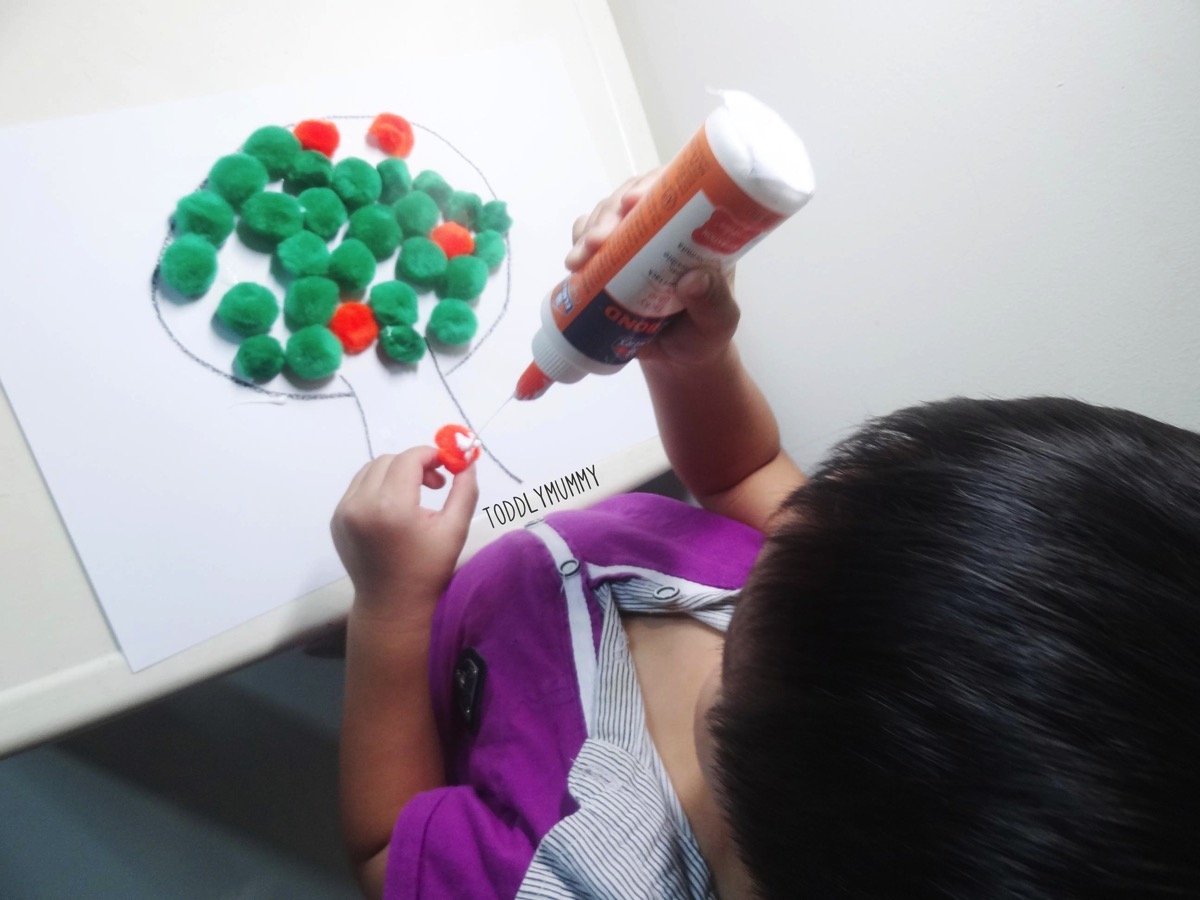
Pom pom tree

Hope you enjoyed the ideas shared here. Do share what home learning ideas you have using items from Daiso.

**********

Next up on the Daiso 101 blog train is Adeline of Growing with the Tans. Adeline loves good deals, and what better place to find them than at Daiso? When she isn't out shopping at Daiso, she looks after her 3-year-old son, Noah, and blogs about their family life, activities that keep Noah busy, and books that they enjoy.


This post is part of the "DAISO 101" blog train hosted by Mum in the Making. Click on the button below to get the full list of Daiso posts, and happy shopping!


**********

Thank you for reading. If you like this post, please do connect with me on FacebookInstagram and Twitter, so I can share our fun adventures, thoughts and exploits with you. 

Monday, June 30, 2014

Interview: Sarah Toh, Principal of Kidz Literacy Cove

In March this year, we did a review of a phonics lesson at Kidz Literacy Cove.

Today, I'm very happy to introduce Sarah Toh, principal of Kidz Literacy Cove. She will share with us the story behind Kidz Literacy Cove, and give tips on how parents can reinforce literacy learning with their kids at home. 


*****


Please tell us more about Kidz Literacy Cove. What is its focus?
Kidz Literacy Cove (KLC) is an educational centre specialised in carrying an Australian-based English literacy program that teaches phonics, writing, word recognition and early spelling skills in a fun and interactive way. Our programmes are specially written by Victoria Carlton, director of the International Centre for Excellence (Australia) and crafted to meet the needs of children in Singapore. At KLC, every child is respected as a unique individual and parents are valued as our teaching partners. We provide a cosy and conducive environment for children as we believe they learn best when they feel comfortable.

Why did you set up Kidz Literacy Cove? What inspired you?
I used to be working in the preschool sector and see the need for children to have an allocated time for learning literacy with a structured curriculum. I see the importance of having passionate and committed teachers too.

What is your view of preschool education and the correct literacy standard? Should more be done?
I strongly believe that all teachers must be well trained in phonics and have an understanding of how children learn language and literacy. Preschool sector should also have a more structured literacy curriculum as a guideline for all teachers to make use of.

There are so many enrichment centres that focus on developing a child's literacy, what is Kidz Literacy Cove's strength? How do you differentiate yourself from others?
Kidz Literacy Cove engages local and well trained professionals who have experiences working in the Early Childhood sector. We only engage teachers who are passionate and have a strong interest in working with children. Our group sizes are kept very small to a maximum of four children for the younger age groups and a maximum of six children per group for children five years old and above. We cater one-to-one sessions for children who require special attention and lesson plans are customized for them. We are running Victoria Carlton's Literacy Programme and it is a researched and well proven programme that helps children perform at least one year ahead of their academic level.

Literacy is more than just learning to read. Do you agree? Why or why not.
Literacy is more than just learning to read. Young children start learning literacy through listening to what adults are saying. They look at our facial expressions to make meanings of what we are trying to say. Then they start making sounds to communicate with us and subsequently learning to speak with words and sentences. Environment plays an important role in teaching young children literacy (e.g children look at letter 'M' and they go Macdonalds. Children observe symbols and prints on the roads and they learn what these are used for.)

Do parents really need to send their children for literacy classes? Can't they reinforce what their children learn at home?
Definitely home teaching is important and learning languages takes place anywhere, anytime and with anyone. While shopping at the supermarket, parents can communicate effectively by having discussions with what they see around. Parents can teach at home, but it is more of a reinforcement of what children have learnt in school. Parents send their children to us as they would want to make use of our proven and structured curriculum and at the same time having well trained professionals to guide their children in learning. Children learn differently in a home environment and in a school environment with peers. I see the need for parents to engage their children with literacy classes while parents can do follow up activities to extend their children's learning. Fun activities can be initiated by parents or children during this family bonding time.

How should parents reinforce and extend their children’s learning at home? Can you give 5 tips?
1. Reading a book together before bedtime
2. Doing an art and craft activity together to reinforce what child has learn (e.g. learning how to write letter 'a', parents can do finger painting together with child, writing letter 'a' with different colours of paint)
3. Watching a youtube video on a topic that was taught in school
4. Having an outdoor trip (e.g. going to the zoo to learn more about a particular animal according to the theme of the curriculum in school)
5. Playing hands on games (not electronic ones)

As a mother, what would you say is your parenting style? What is your belief when it comes to helping a child learn?
As a mother to my infant daughter, I believe I will adopt the authoritative parenting style as I believe in 2 way communication. I would set clear and reasonable limits and at the same time allow my child to develop autonomy, Spending quality time and communicating effectively with children, even if is to just sit down and play with them, would consider quality time spent. I belief in giving adequate time for a child to learn. Avoid rushing to teach or to get things done - a little difficult to achieve but I will try.

What three things do you think is most important for kids to learn in today's world?
Respect, morals and filial piety.

What is the one thing that parents should know, but don't?
Parents these days spend a lot of money buying toys/materials/electronics for children but what they need is to have parents spending time "playing" and discovering with them.

Please tell us more about yourself. What were you doing before Kidz Literacy Cove?
I began my career in the field of early childhood education at an early age and pursued my Diploma in Early Childhood Education with Ngee Ann Polytechnic. Knowing where my strength and passion lies, I quickly attained my specialisation in the field where I graduated with a Bachelor of Arts (with honours) in Early Childhood Education. Upon graduation, I was engaged by a preschool that admired me for my outstanding performance during my service at the school as an assistant teacher. With strong determination and a natural flair for teaching, I quickly rose to the position of a senior teacher within 2 years and undertook leadership roles where I was tasked to mentor new teachers as well as student-teachers. I then moved on to an international preschool where I maintained my position and continued to teach for several years. I was again promoted to be a vice principal of the preschool.
I set high standards for myself when it comes to the planning and implementing of curriculum as I believe that education is about providing meaningful learning experiences for children to learn and develop at their own pace, and should never be forced on an unwilling child. “All children have the ability to learn, we should figure that out and teach the way they learn.”. Most importantly I also believe that a happy child is one who learns the most and will continue to yearn for more knowledge. This love and passion for teaching subsequently led me to establish Kidz Literacy Cove (KLC) where I aim to further reach out and touch the hearts of the younger generation.

Promoting fun, joy and excellence, I ensure that KLC will be a haven where parents are more than welcome to be part of their children’s education and where children’s torch for learning burns bright and strong.
I am currently the principal of KLC. Together with my team of teachers, I also conduct classes at KLC and constantly monitor the progress of the children.

*****

Thank you, Sarah.

**********

Thank you for reading. If you like this post, please do connect with me on FacebookInstagram and Twitter, so I can share our fun adventures, thoughts and exploits with you. 

Tuesday, March 18, 2014

Play Learning Tuesday: Learning fun with washi tapes

We don't seem to tire of washi tapes, decorative tapes. Basically anything that allows us to peel, cut and stick. 

Like I mentioned in this post, the kids have been crazy about tapes, and it has allowed me to witness first hand how freedom to create can bring out an amazing independence in them. 

So why not try it for learning? And instead of trusty paper, we decided to use the door as our canvas.

Washi learning 1
What sort of learning? Anything! Alphabets, numbers, Chinese, English. That's the beauty and flexibility of tapes. Plus, it adds a whole lot of fun!

Washi learning 2
So here is EV making T, then adding another horizontal strip of tape to make I.

Washi learning 3
Then she stuck three horizontal lines, one on top of the other to make 一 (one),二 (two) and 三 (three), reading after she made the respective characters. Simple ones just for starters to build her confidence and familiarity of the strokes. This method is so much more engaging than just rote writing.

Learning Points
a. Alphabet recognition & formation
b. Chinese character recognition & formation
c. Numbers
d. Shapes

**********
Thank you for reading. If you like this post, please do connect with me on FacebookInstagram and Twitter, so I can share our fun adventures, thoughts and exploits with you. 

Tuesday, March 11, 2014

Review + Giveaway: Kidz Literacy Cove

As some of you may know, I use Jolly Phonics at home to teach my kids. And while attending the workshops, I had already heard of Kidz Literacy Cove. It was set up by a young lady Sarah Toh, who was formerly a preschool teacher before deciding to strike out on her own. During my interactions with her, I found that she is a very warm and approachable person, and it was clear that she loves kids. It's not easy to be an entrepreneur and I salute her for taking the big step. She also recently gave birth to a beautiful daughter.

She invited us for a trial lesson at Kidz Literacy Cove last year, and I was glad to get a first hand experience of how Jolly Phonics is used in an enrichment centre environment. There really is just so many things one can do to transform a simple room into a conducive learning environment. And in this area, there's lots to learn from Kidz Literacy Cove.

Kidz Literacy 1

Nestled in a cosy corner near Serangoon Gardens, Kidz Literacy Cove is a non-descript enrichment centre with a simple white wall facade. While some might be shocked by its simplicity, really, don't judge a book by its cover. What's important is the learning environment inside and the people who deliver the content. In these areas, I think Kidz Literacy Cove has more than fulfilled.

Kidz Literacy 6

Beyond the reception area, where there is a line of chairs for parents to sit and mingle while waiting for their kids, Kidz Literary Cove has two lesson rooms. Our trial occurred in the bigger room. Understandably, EV was a little wary of the new environment, but it didn't take long for her to warm up to Sarah, who was visibly pregnant at that time. Perhaps Sarah reminded EV of the time her own mummy was pregnant with her little brother, she was unbelievably sweet and courteous to Sarah.

The trial lesson was conducted by one of Sarah's teachers. The sound of the day was 'x', and several words with this letter was introduced to EV. What I like about this part of the lesson is the location it was conducted, while sitting on a big alphabet carpet, in front of an easel. I think the carpet is just so apt and if the teacher needed to make quick reference to other letters, she can point to the carpet too, rather than just write them in the easel. It's something more tangible so that kids can really 'touch and feel' the letters.

Kidz Literacy 2

Kidz Literacy 5

At the corner of the room is a nice cosy story telling area, where the next part of the lesson was held. Besides telling the story, the teacher also engaged in a conversation to ask EV about the story, to gauge her understanding of it, and the words inside it. This was followed by some table activities where EV did art and crafts and some writing. She had fun pasting the cotton wool on the clouds.

Kidz Literacy 4

One of the key things I like about Kidz Literacy Cove is the colourful and insightful alphabet related pin ups on the wall. A fraction of it is related to Jolly Phonics, obviously, like the sound freize and the hat of tricky words. Other wall installations like the word tree are helpful in inspiring the children and in creating a conducive learning environment. I also like the way kids' work is hung up, using a clothes peg hanger. So innovative!

Kidz Literacy 3

Giveaway!!
Here's your chance to win one of five trial classes which Kidz Literacy Cove has so kindly sponsored. Just follow the instructions below. Good luck!

Terms and conditions:
- Entries that do not fulfill the requirements stated will be disqualified without notice.
- Winners will be notified by email, through the email address provided in the Rafflecopter widget.
- Winners must confirm by reply email, within three days. Otherwise, a new winner will be picked.
- This giveaway is open to Singapore residents only.
- Giveaway starts on 11 March and ends on 25 March (inclusive) at midnight.
- Winners will be announced on this post and my Facebook page by 28 March.

a Rafflecopter giveaway

Disclaimer: Kidz Literacy Cove sponsored a trial session for the purpose of this review. No monetary compensation was received. All opinions  and images are my own.

**********

Thank you for reading. If you like this post, please do connect with me on FacebookInstagram and Twitter, so I can share our fun adventures, thoughts and exploits with you. 

Thursday, February 27, 2014

Book Box Thursday + Giveaway: Rainbow Bear's Dinosaur Discovery

Last year, you might have come across our review and giveaway of Julia Gabriel's An Alphabet Zoo phonics books, or even read her interview on visual literacy. Today, we continue with our sharing of awesome phonics books, by reviewing another of her creations - Rainbow Bear's Dinosaur Discovery: An Adventure in Blends and Digraphs.

Julia Dinosaur Alphabet

As the title suggests, the book is a continuation of An Alphabet Zoo. A book two, if you will. This book, CD and songbook set tracks a new journey in Rainbow Bear's alphabet adventure. This time, he meets with dinosaurs of all shapes and sizes, which have strange names that coincidentally start with blends and digraphs, such as Flora Flaparaptor and Theo Thecocoelurus. 

So what are blends and digraphs, you ask? A blend, also known as a consonant blends, is when two or more consonants are blended together and each sound can be heard distinctly, such as cr, dr, fr sl and st. A digraph, also known as consonant digraph, is when two or more consonants come together to make a single sound, such as ch, wh and sh.

Dinosaur Discovery deals with 24 of these blends and digraphs, specifically two-letter ones. I like the way how the construction of the blends and digraphs are worked into the songs' lyrics. For example. The blend 'SL'. The lyrics goes like this: 'S and L make sl sl Slippy Sliporaptor', while for the digraph 'WH', the lyrics goes 'W and H make wh wh Whoopee Whalonodon'. The formation of the blends and digraphs are explained and sounded out, in addition to a catchy name, all accomplished in a few words. We found out that the musical brains behind the tunes is Matt Grey, who was also responsible for the music in An Alphabet Zoo. Ahh.. that explains why the music in this version worked for EV and AA.

Like in An Alphabet Zoo, each dinosaur character has its own dedicated page and illustration in Dinosaur Discovery, both of which is illustrated by Kathy Creamer, a published British children’s book author and illustrator. In this way, even though it was a new book, it was easy to introduce it to EV and AA, since they are so familiar with the format and drawing style. One difference is the tongue twisters for each character, such as 'Plato Platyceratops plays with plump plums'. Even adults will have fun trying to say these amusing twisters, making it so much more fun to read together as a family.

What makes this book even more interesting is the Dinosaur Fact Page at the end, where characteristics of each dinosaur are listed. Now before you think that some of the dinosaurs, like Chindesaurus, Fruitadens and Smilodon, are figments of the creators' imagination, let me assure you that these three dinosaurs I have named were real. Their names may sound quirky and funny, but they did exist, millions and millions of years ago, according to the online search that I did. There are imaginary dinosaurs in Dinosaur Discovery though, like Snidopteryx and Swotodon, and the fact page identifies them as exactly that.

Rainbow Bear's Dinosaur Discovery: An Adventure in Blends and Digraphs retails at $29.95. You can also dramatise the fun, catchy tunes with the Rainbow Bear hand puppet, that is sold separately at $32.05.

Giveaway!!
Here’s your chance to win a copy of Rainbow Bear's Dinosaur Discovery: An Adventure in Blends and Digraphs. There are five copies to be given away, sponsored by Julia Gabriel Education. Just follow the intructions below to enter. Good luck!

Terms and conditions:
- Entries that do not fulfill the requirements stated will be disqualified without notice.
- Winners will be notified by email, through the email address provided in the Rafflecopter widget.
- Winners must confirm by reply email, within three days. Otherwise, a new winner will be picked.
- This giveaway is open to Singapore residents only.
- No repeat winners will be allowed.
- Giveaway starts on 27 February and ends on 13 March (inclusive) at midnight.
- Winners will be announced on this post and my Facebook page by 19 March.

a Rafflecopter giveaway

Disclaimer: This review was done with our own copy of Rainbow Bear's Dinosaur Discovery: An Adventure in Blends and Digraphs. No monetary compensation was received. All opinions are my own.


**********

Thank you for reading. If you like this post, please do connect with me on FacebookInstagram and Twitter, so I can share our fun adventures, thoughts and exploits with you. 

Tuesday, February 04, 2014

Play Learning Tuesday: Letter learning with aluminium

If you've noticed, our alphabet activities at home have moved beyond just letter recognition. I'm constantly thinking of alternative ways to help EV in her letter formation and writing, besides just repetitively writing letter after letter, like a boring drill. And I've realized: sometimes the most fun activities are made out of things that you least expect.

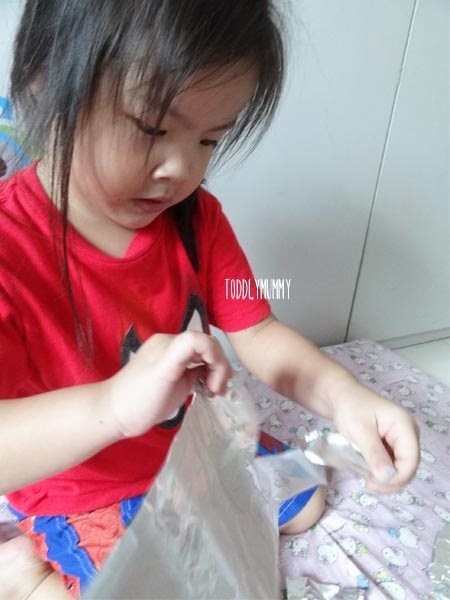
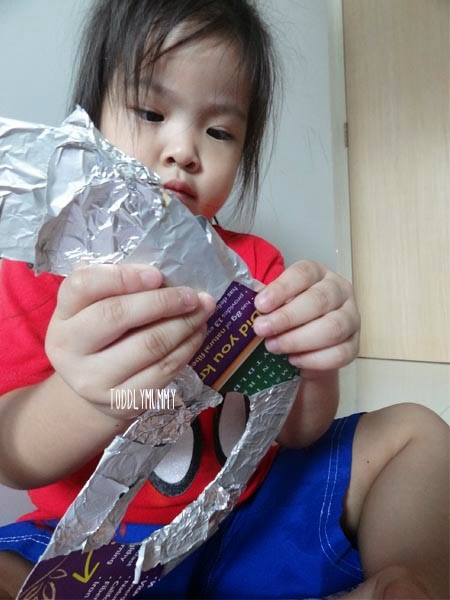
Such as cardboard and aluminium foil. I dug out a cardboard box, and cut out EV's favourite letter, which she claims is the lower case 'e'. Then teared out big pieces of aluminium foil and got EV to tear them into long strips. This let her practise her motor skills and dexterity. After showing her once what to do with the cardboard and aluminium, she finished wrapping the letter 'e' with the aluminium, all by herself.

EV aluminium 1

EV aluminium 2
This activity can also be extended to upper case letters and numbers, or even for shape recognition for younger kids.

Learning Points:
a. Letter formation
b. Letter recognition & sounds review
c. Motor skills

What play learning activities are you doing today?

*****


What is Play Learning Tuesday?

Play Learning Tuesday is a bi-weekly linky hosted by Toddly Mummy where bloggers are invited to share their child-friendly play, learning and craft activities. Taking part for the first time? You might like to read the guidelines here first.


Toddly Mummy


**********

Thank you for reading. If you like this post, please do connect with me on FacebookInstagram and Twitter, so I can share our fun adventures, thoughts and exploits with you. 

Tuesday, January 21, 2014

Play Learning Tuesday: Letter fun with wool

After a brief hiatus, Play Learning Tuesday is back!!! During our holidays, a craft that we had done earlier broke into pieces, rather strands. I'm talking about a spider that we made (you can read about how we made it here). I went into the room one day to see the mischief that EV and AA had gone into. They had just loosened the strands of the spider, and the pieces and pieces of wool were scattered all around the floor. It sure was a mess.

As usual, I wasn't willing to just throw away the wool. It would be such a waste. I was confident that a use will come along one day, so I hoarded all the wool strands into my little recycle box, which also contained other items like egg cartons and milk bottles, just waiting to be created into something fun, something creative, or something for learning.

So it came to be that EV and I were revising some letters. We decided to use the wool to create the letters, so EV could also practise her letter formation in a fun way.

Letters with wool
 Plus, we got to recycle the wool strands. 

It's great to be a hoarder after all.

Are you using any recycled materials in your fun, play learning activities?

*****


What is Play Learning Tuesday?

Play Learning Tuesday is a bi-weekly linky hosted by Toddly Mummy where bloggers are invited to share their child-friendly play, learning and craft activities. Taking part for the first time? You might like to read the guidelines here first.


Toddly Mummy


Linking up with:


Tot School No Time For Flash Cards Photobucket Teach Beside Me


**********

Thank you for reading. If you like this post, please do connect with me on FacebookInstagram and Twitter, so I can share our fun adventures, thoughts and exploits with you. 

Thursday, November 28, 2013

Book Box Thursday + Giveaway: An Alphabet Zoo

As some of you may know, phonics plays an extremely important part in our family, as we try and develop the literacy in EV and AA. There are a couple of phonics books that we use, and today, I’d like to share one that’s been a part of our literacy journey.

Julia Alphabet
Photo: Julia Gabriel Education
It’s An Alphabet Zoo, Phonemic Adventure with Rainbow Bear, written by Julia Gabriel (read her interview on visual literacy here). This is a book and CD set that brings us on an alphabet adventure with Rainbow Bear to meet animals with names that follow the alphabet, such as Andy Ant, Freddie Frog, Ollie Octopus and Uncle Ultrasaurus. Each character is briefly introduced with a voice over, followed by a catchy song that also infuses the phonemic sounds of the alphabets.

What worked for us was the music. The tunes have been playing in our home and on our car journeys since EV was 18 months old. And for AA, he’s basically been listening to it since he was in my tummy. One thing I would like to share: music is a wonderful way to teach. And in this case, it was a wonderful aid in teaching EV and AA phonics, and often, EV and AA will sing or hum along with the songs. Of course, they do have their favourite ones, depending on which animal they like at that moment, but generally, the songs were a hit, and continue to be. This possibly is also due to the fact that all the songs follow the tune. This builds consistency and familiarity, and makes it easy for kids to identify the songs. However, this mummy wishes that the tunes have a bit more variety, for more exposure.

The book is equally entertaining, visually, with illustrations done by Kathy Creamer, a published British children’s book author and illustrator. Each quirky animal character has its own dedicated page and illustration, which infuses many things that start with the same letter within the illustration. For example, for letter K for Kara Koala, the illustration also depicts a key, kite and kangaroo. This means that when listening to the CD, it is possible to assimilate their listening with reading, with additional activities such as asking them to point out a particular thing on the page. More than that, I also discuss what is happening in the illustrations and what they think of the illustrations with EV and AA, to help build their visual literacy, important in today’s world when we are bombarded by visuals of every kind all around us.

An Alphabet Zoo brings together reading, listening and viewing, important literacy skills that we all need to develop in our kids. We thoroughly enjoy it, and we hope that you will too.

An Alphabet Zoo, Phonemic Adventure with Rainbow Bear retails at $29.95. And if you want to add a little more fun and drama, there is even a finger puppet set of 26 puppets that is sold separately at $116.60.

Giveaway!!
Here’s your chance to win a copy of An Alphabet Zoo, Phonemic Adventure with Rainbow Bear. There are five copies to be given away, sponsored by Julia Gabriel Education. Just follow the intructions below to enter. Good luck!

Terms and conditions:
- Entries that do not fulfill the requirements stated will be disqualified without notice.
- Winners will be notified by email, through the email address provided in the Rafflecopter widget.
- Winners must confirm by reply email, within three days. Otherwise, a new winner will be picked.
- This giveaway is open to Singapore residents only.
- Giveaway starts on 28 November and ends on 13 December (inclusive) at midnight.
- Winners will be announced on this post and my Facebook page by 17 December.

Disclaimer: This review was done with our own copy of An Alphabet Zoo, Phonemic Adventure with Rainbow Bear. No monetary compensation was received. All opinions are my own.


**********

Thank you for reading. If you like this post, please do connect with me on FacebookInstagram and Twitter, so I can share our fun adventures, thoughts and exploits with you. 

StickerKid promo banner

Tuesday, September 17, 2013

Play Learning Tuesday: 'at' CVC Spinaround Game

A few weeks ago, I shared a literacy matching game that could be used for revising of alphabets and numbers, as well as for visual recognition of CVC words, in particular, words ending with 'at'.

Today, I am sharing another game that narrows the focus, concentrating on practising and revising CVC words. In our case, we used it for eight 'at' words.

We call it the 'at' Spinaround Game.

AT Spinaround game cover
Here is what you need.
2 pieces of round cardboard (we cut ours out of a recycled cereal box), one slightly bigger than the other
Paint
Marker
Scissors
Paper fastener

Firstly, I got EV to paint both round pieces of cardboard in her favourite colours. She chose blue and yellow.

After the paint dried, I poked holes in the middle of both cardboard pieces and loosely secured them together with the paper fastener.

I cut a small piece of cardboard from the smaller cardboard to create the 'viewer' so the letters written on the bigger piece of cardboard can be seen.

Then I wrote 'at' on the smaller cardboard, just to the right of the 'viewer'. I also wrote eight different letters on the bigger cardboard, at equal intervals. As both circles are turned around and the letters matched, eight CVC words can be created - sat, pat, cat, hat, rat, mat, fat and bat. These letters come from the first three letter groups of Jolly Phonics, a system that we use and has proven to be very effective in developing the literacy of EV and AA. Read more about EV's experience with JP here.

This Spinaround Game can be adapted for other CVC words as well. So simple, so fun, multiple possibilities, cost efficient - perfect!

What fun word games are you playing this week?

*****

What is Play Learning Tuesday?
Play Learning Tuesday is a weekly linky hosted by Toddly Mummy where bloggers are invited to share their child-friendly play, learning and craft activities. Taking part for the first time? You might like to read the guidelines here first.


Toddly Mummy


Linking up with:


Tot School No Time For Flash Cards Activities for Children Lessons Learnt Journal Kids Co-Op Tuesday Tots Mama to 5 Blessings

Tuesday, August 06, 2013

Play Learning Tuesday: Pom-pom alphabet fun

What fun we had over the weekend! I have been extremely busy at work, and have been coming home rather late last week. Each time, E will not fail to say 'mummy, I love you so much!'. I missed her so much too. So I was really glad for the opportunity to spend time with her over the weekend. Just the two of us, doing the things we love - playing together!

EV was really excited for some alone-time with mummy, and so was I. I didn't have anything planned, and was really scratching my head trying to think of a meaningful, yet fun activity for her. Something that makes use of available materials at home, something that's a bit different from what we've done before, something that will get her laughing with glee. And then, my eye spied the bag of pom-poms in the cupboard.

Pom pom alphabet fun 1
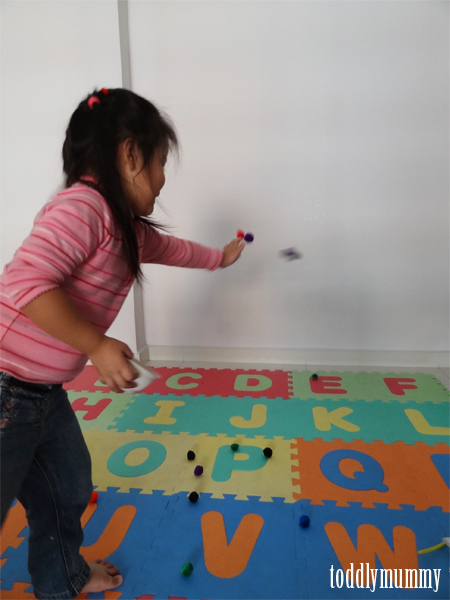
This activity is extremely easy to do. Besides the pom-poms, which you can get at most craft shops, I also took out our pipe cleaner, letting EV choose her favourite colours (which have now expanded to black and red, besides blue). We have an alphabet mat in the living room, so I made use of that. What EV had to do was to place the pom-poms on the letters, in the direction that they are written. For the pipe cleaners, she bent them to fit the letters.

This is great for reinforcing letter recognition and formation.

To push this activity a little further, and to stretch her letter recognition, we started a game of 'Where's the letter?'. I called out a letter, and EV had to search for it, and throw pom-poms on it. Sometimes I would give the letter sound instead. One pom-pom became a rain of pom-poms. She was having so much fun.

Pom pom alphabet fun 2
This is definitely one activity that we can do again.


Do your kids love playing with pom-poms too?

*****

What is Play Learning Tuesday?
Play Learning Tuesday is a weekly linky hosted by Toddly Mummy where bloggers are invited to share their child-friendly play, learning and craft activities. Taking part for the first time? You might like to read the guidelines here first.


Toddly Mummy


Linking up with:


Tot School No Time For Flash Cards Activities for Children Lessons Learnt Journal Kids Co-Op Tuesday Tots